Best 7 cities in morocco to visit
Cities in Morocco: The Ultimate Guide to the Kingdom’s Most Captivating Urban Destinations
Morocco is one of the most diverse and visually stunning countries in the world — a place where ancient medinas brush up against modern boulevards, Saharan winds reach the Atlantic coast, and every city tells a different story. Whether you’re planning a trip or simply dreaming of North Africa, this guide walks you through the most important cities in Morocco, what makes each one unique, and why they belong on every traveller’s radar. Our tours
Why Moroccan Cities Are Unlike Anywhere Else
Moroccan cities — known in Arabic as mudun — are shaped by centuries of Berber, Arab, Andalusian, and French influence. The result is a rich urban tapestry: labyrinthine medinas (old city quarters) listed as UNESCO World Heritage Sites, French-built villes nouvelles (new towns), and a thriving contemporary culture layered on top. From the imperial grandeur of Fes to the bohemian cool of Essaouira, each city in Morocco has its own personality, cuisine, and rhythm.
The Imperial Cities of Morocco
Morocco has four cities historically designated as Imperial Cities — seats of successive dynasties. These are the cultural heartland of the country.Tripadvisor
1. Marrakech — The Red City
Marrakech is Morocco’s most visited city, and for good reason. Built from the rose-red sandstone of the High Atlas foothills, it glows a warm terracotta at dusk. The medina of Marrakech is one of the most vibrant in the Arab world — a maze of souks selling leather goods, spices, handwoven rugs, and silver jewellery.
Top highlights:
- Jemaa el-Fna Square — the beating heart of the city, alive with storytellers, snake charmers, and food stalls every evening
- The Bahia Palace — a 19th-century masterpiece of Moorish architecture
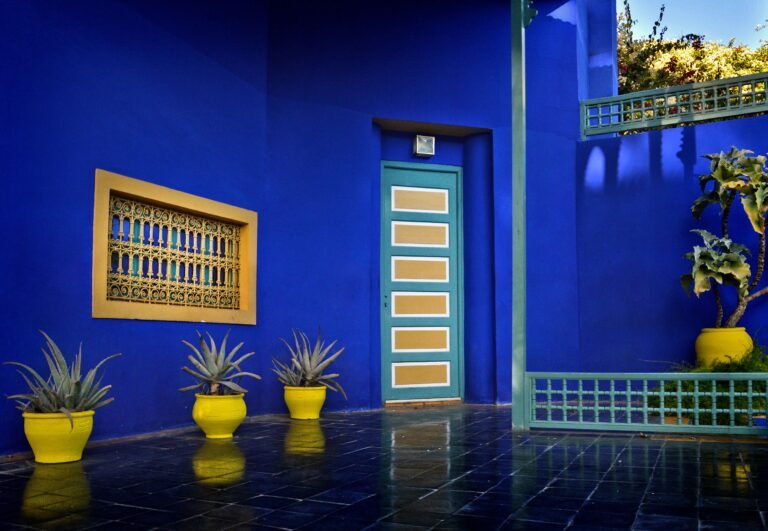
- Majorelle Garden — an iconic cobalt-blue botanical garden restored by Yves Saint Laurent
- The souks of the medina — over 18 specialist markets covering everything from leather tanneries to brass lanterns
Marrakech is also Morocco’s gateway to the High Atlas mountains and the Sahara Desert, making it a natural hub for adventure travellers. Tripadvisor
2. Fes — The Spiritual Capital
Fes (also spelled Fez) is widely considered the cultural and spiritual soul of Morocco. It is home to Fes el-Bali, the world’s largest car-free urban area and a UNESCO World Heritage Site. Walking through its 9,400 narrow alleys feels like stepping back into the 9th century.
Top highlights:
- Al-Qarawiyyin University — founded in 859 AD, it is recognized as the oldest continuously operating university in the world
- The Chouara Tannery — the city’s famous leather dyeing pits, a riot of colour and centuries-old craft
- The Medersa Bou Inania — a stunning 14th-century theological school with intricate zellige tilework and carved cedar ceilings
- Fes el-Jdid — the “New Fes” district, home to the Royal Palace and the mellah (old Jewish quarter)
Fes is the go-to city for travellers who want the most authentic, least touristy Morocco experience. Its food scene — including the legendary pastilla (a sweet-savoury pigeon pie) — is arguably the finest in the country.
3. Meknès — The Forgotten Imperial City
Often overshadowed by Marrakech and Fes, Meknès rewards those who make the effort. Built in the 17th century by Sultan Moulay Ismail, who dreamed of creating a Moroccan Versailles, the city is characterised by its monumental scale — enormous city walls, grand gates, and vast granaries.
Top highlights:
- Bab Mansour — one of the grandest gates in all of North Africa, decorated with elaborate mosaic tilework
- Moulay Ismail Mausoleum — an active mausoleum and one of the few Islamic religious sites in Morocco open to non-Muslims
- The Heri es-Souani granaries and stables — designed to hold 12,000 horses and vast reserves of food during a siege
- Day trip to Volubilis — the best-preserved Roman ruins in Morocco, just 30 km away
Meknès is a slower, more local city — a great place to experience everyday Moroccan life without the tourist crowds.
4. Rabat — The Modern Capital
Rabat is Morocco’s political capital and, perhaps surprisingly, one of its most pleasant cities to explore. It combines a well-preserved medieval medina and kasbah with a handsome French colonial city centre, wide boulevards, and a laid-back coastal atmosphere.
Top highlights:
- Kasbah of the Udayas — a striking Almohad fortification overlooking the Atlantic, with a beautiful Andalusian garden inside
- Hassan Tower — the unfinished minaret of what would have been the world’s largest mosque, begun in the 12th century
- Mausoleum of Mohammed V — an exquisite piece of Moroccan craftsmanship housing the tombs of King Mohammed V and King Hassan II
- Chellah Necropolis — a haunting ancient Roman and medieval site overgrown with fig trees and inhabited by nesting storks
Rabat is also home to a lively café culture, excellent restaurants, and strong art and music scenes.
Morocco’s Coastal Cities
Morocco stretches along two coastlines — the Atlantic to the west and the Mediterranean to the north — giving rise to a string of remarkable port cities.
5. Casablanca — The Economic Powerhouse
Casablanca is Morocco’s largest city and its commercial capital. It’s a very different experience from the imperial cities — modern, fast-paced, and cosmopolitan — but it holds its own remarkable attractions.
Top highlights:
- Hassan II Mosque — one of the largest mosques in the world, built dramatically on a promontory over the Atlantic Ocean, with a retractable roof and a laser that points toward Mecca
- The Art Deco architecture of the French Nouvelle Ville district
- The Corniche — a seafront promenade with cafés, restaurants, and ocean breezes
- Morocco Mall and Anfa Place — some of the best shopping in North Africa
Casablanca is Morocco’s business hub and the main international air gateway to the country. It’s a city that rewards curiosity — look beyond the business hotels and you’ll find a rich local culture, wonderful seafood, and some of the country’s best nightlife.
6. Tangier — The Gateway to Africa
Tangier sits at the very tip of North Africa, where the Atlantic meets the Mediterranean and Africa stares across the Strait of Gibraltar at Europe. It was for much of the 20th century an international zone — a haven for writers, artists, and spies — and that cosmopolitan, slightly edgy energy still lingers.
Top highlights:
- The Kasbah and Dar el-Makhzen — the old palace, now a museum of Moroccan art and antiquities
- Cap Spartel — the dramatic headland where two seas meet
- The American Legation — the first American public property outside the United States, now a museum
- The Caves of Hercules — sea caves carved partly by the ocean and partly by ancient millstone cutters, with a famous window shaped like the African continent
Tangier is a city undergoing rapid transformation, with major infrastructure investment turning it into a significant Mediterranean port and logistics hub.
7. Essaouira — The Wind City
Essaouira (pronounced essa-weera) is Morocco’s most relaxed and artistic coastal city. Built on an Atlantic peninsula with ramparts designed by a French architect, it has an almost Mediterranean feel — whitewashed walls, blue shutters, and a permanent sea breeze that has made it one of the world’s top windsurfing destinations.
Top highlights:
- The Skala de la Ville — the ramparts with their bronze cannons overlooking the crashing Atlantic
- The medina — a UNESCO World Heritage Site that feels remarkably uncrowded compared to Marrakech or Fes
- The harbour — a working fishing port where blue boats unload the day’s catch
- The Gnawa Music Festival — held each June, one of the largest world music festivals in Africa
Essaouira has long attracted artists, musicians, and writers, and its laid-back charm makes it a perfect counterpoint to the intensity of the imperial cities.
8. Agadir — The Beach Resort City
Agadir is Morocco’s premier beach resort destination, rebuilt after a devastating earthquake in 1960. It’s a modern, planned city with a long sandy beach, a marina, and a resort strip that caters primarily to European sun-seekers.
Top highlights:
- Agadir Beach — 10 km of golden sand with calm Atlantic surf
- The Souk El Had — one of the largest markets in Morocco
- The reconstructed Kasbah — offering panoramic views over the bay
- Sous-Massa National Park — a short drive south, home to flamingos, ibis, and rare bald ibis
Agadir is the gateway to the dramatic Souss Valley and the Anti-Atlas Mountains, and serves as a base for exploring the lesser-known towns of southern Morocco.
Other Notable Cities in Morocco Worth Visiting
Morocco’s geography is extraordinarily varied, and beyond the headline destinations, there are a number of other cities worth exploring:
- Chefchaouen — the famous “Blue City” in the Rif Mountains, where the medina is painted entirely in shades of blue and indigo. One of Morocco’s most photographed places.
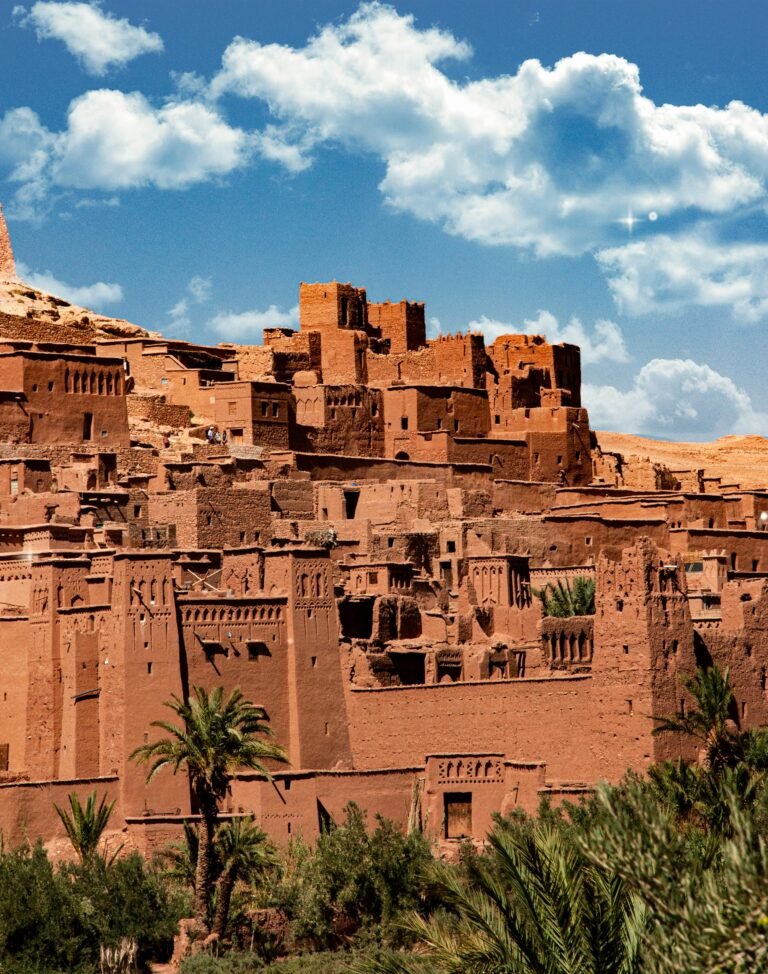
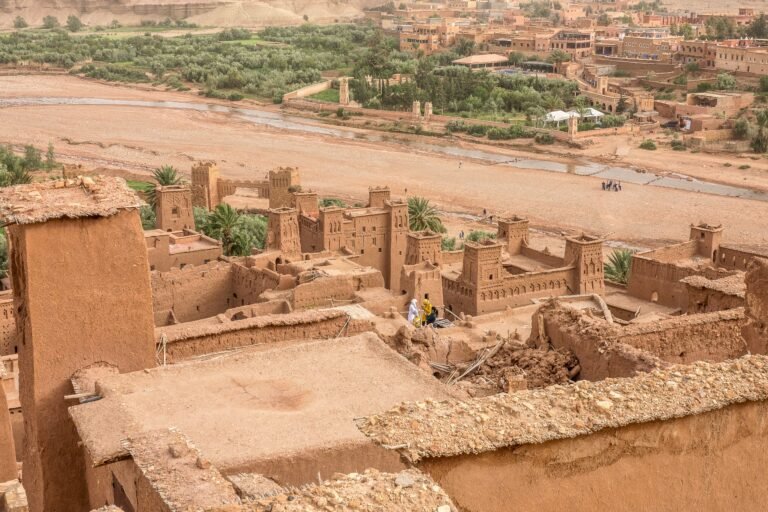
- Ouarzazate — the “Gateway to the Sahara,” this desert city is the base for exploring the Draa Valley, Aït Benhaddou (a UNESCO-listed ksar), and the dunes of Merzouga.
- El Jadida — a coastal city with a remarkable Portuguese-built cistern beneath the medina, now a UNESCO World Heritage Site.
- Tetouan — a northern city with strong Andalusian heritage, its medina another UNESCO listing, and perhaps the most Spanish-influenced city in Morocco.
- Safi — a port city famous for its ceramics industry, particularly hand-painted platters and tajines.
- Beni Mellal — an emerging city at the foot of the Atlas Mountains, growing rapidly as a regional economic centre.
Practical Tips for Visiting Cities in Morocco
Getting around: Morocco’s train network (ONCF) connects the major Atlantic cities — Tangier, Rabat, Casablanca, Marrakech, Fes, and Meknès — efficiently and affordably. Long-distance buses (CTM and Supratours) serve the rest of the country. Domestic flights connect Casablanca to Agadir, Tangier, Marrakech, and Fes.
Best time to visit: Spring (March–May) and autumn (September–November) offer the most pleasant temperatures across most Moroccan cities. Summers can be extremely hot inland but pleasant on the coast. Winters are mild in coastal cities but can be cold in Fes and Marrakech.
Language: Arabic (Darija dialect) and Tamazight (Berber) are the main spoken languages. French is widely used in business and administration. Spanish is common in the north. English is increasingly spoken in tourist areas.
Currency: The Moroccan Dirham (MAD). Cash is preferred in the medinas; cards are accepted in most hotels and restaurants.
Safety: Morocco is generally a safe country for travellers. The cities have tourist police and well-trodden visitor infrastructure. As in any country, normal precautions apply — be aware of your surroundings in busy souks and avoid displaying expensive items openly.
Final Thoughts: Which Moroccan City Should You Visit First?
If you’re visiting Morocco for the first time, Marrakech is the classic entry point — well-connected, full of character, and endlessly stimulating. For deeper culture and history, Fes is unrivalled. For a coastal escape, Essaouira is hard to beat. And if you want to understand modern Morocco alongside the ancient, Rabat deserves far more attention than it usually gets.
The truth is, no single city in Morocco tells the whole story. The kingdom rewards those who wander between its imperial walls, its Atlantic shores, its Saharan edges, and its mountain villages. Every city you visit will leave you wanting to see one more.
Planning a trip to Morocco? Use this guide as your starting point and customise it to the experiences that matter most to you — whether that’s losing yourself in a medina, surfing Atlantic swells, or watching the stars rise over the Sahara.