Moroccan Food in Morocco: The Ultimate Guide to an Unforgettable Culinary Journey
When people dream of North Africa, they often picture towering sand dunes, bustling souks, and the call to prayer echoing across ancient medinas. But ask anyone who has actually traveled there, and they will tell you that the real magic of the country lies on the plate. Moroccan food in Morocco is not just a meal — it is a full sensory experience that blends centuries of Berber, Arab, Andalusian, and Mediterranean influences into something entirely unique. In this guide, we will take a deep dive into everything you need to know about Moroccan food in Morocco, from the most iconic dishes to the etiquette of sharing a meal with a local family.
Whether you’re planning your first trip to Marrakech, Fez, Chefchaouen, or the Sahara, or you simply want to understand why Moroccan cuisine has captured the hearts of food lovers worldwide, this article will walk you through it all. By the end, you’ll understand exactly why so many travelers say that tasting authentic Moroccan food in Morocco is the highlight of their entire trip. Our clints reviwes in tripadvisor
Why Moroccan Food in Morocco Is Different From What You Find Abroad
Many people have tried “Moroccan” food at a restaurant back home and assumed they already know what to expect. The truth is, nothing compares to experiencing genuine Moroccan food in Morocco. Restaurants outside the country tend to simplify recipes, reduce the number of spices, and adapt dishes to local palates. In Morocco itself, meals are cooked slowly, often for hours, using clay pots, family recipes passed down for generations, and spice blends that vary from one household to the next.
The freshness of ingredients also plays a massive role. Vegetables are often picked that same morning from a local souk, meat comes from nearby butchers, and bread is baked daily in communal wood-fired ovens. This attention to freshness and tradition is part of what makes eating in Morocco so different from eating Moroccan-inspired food anywhere else in the world. Get your private day trip with vocatravel
The Building Blocks of Moroccan Cuisine
Before diving into specific dishes, it helps to understand the foundation of Moroccan cooking. Almost every dish is built around a few key elements:
- Spices: Cumin, cinnamon, ginger, turmeric, paprika, saffron, and the famous spice blend called ras el hanout (which can contain over 20 different spices).
- Herbs: Fresh cilantro and parsley are used generously in almost every savory dish.
- Preserved lemons: A staple in Moroccan kitchens, adding a tangy, salty depth to stews.
- Olive oil and argan oil: Both are used for cooking and finishing dishes.
- Slow cooking: Many dishes are simmered for hours to develop rich, deep flavors.
These elements come together to create the distinctive taste that people associate with Moroccan food in Morocco — a taste that is warm, aromatic, slightly sweet, slightly spicy, and always deeply comforting.
Tagine: The Heart and Soul of Moroccan Cooking
No conversation about Moroccan food in Morocco would be complete without talking about the tagine. Named after the cone-shaped clay pot it’s cooked in, a tagine is a slow-cooked stew that can include chicken, lamb, beef, fish, or vegetables, combined with a mix of spices, dried fruits, nuts, and vegetables.
Some of the most popular tagine variations include:
- Chicken Tagine with Preserved Lemon and Olives – A tangy, savory classic found in nearly every Moroccan household.
- Lamb Tagine with Prunes and Almonds – A beautiful balance of sweet and savory flavors, often served at celebrations.
- Kefta Tagine – Spiced meatballs simmered in a rich tomato sauce, often with an egg cracked on top just before serving.
- Vegetable Tagine – A hearty, meat-free option loaded with seasonal vegetables and warming spices.
The cone shape of the tagine pot isn’t just for show — it’s functional. As the stew simmers, steam rises, condenses at the top of the cone, and drips back down into the dish, keeping everything moist without needing much liquid. This cooking method is a perfect example of how traditional techniques still define Moroccan food in Morocco today.
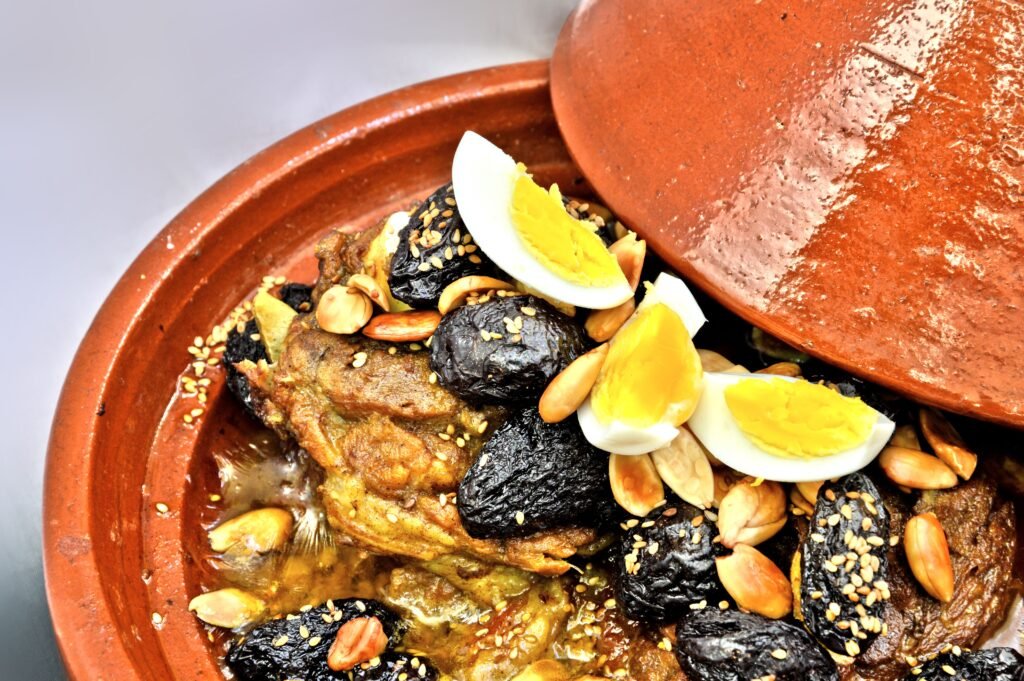
Tagine: The Heart and Soul of Moroccan Cooking
No conversation about Moroccan food in Morocco would be complete without talking about the tagine. Named after the cone-shaped clay pot it’s cooked in, a tagine is a slow-cooked stew that can include chicken, lamb, beef, fish, or vegetables, combined with a mix of spices, dried fruits, nuts, and vegetables.
Some of the most popular tagine variations include:
- Chicken Tagine with Preserved Lemon and Olives – A tangy, savory classic found in nearly every Moroccan household.
- Lamb Tagine with Prunes and Almonds – A beautiful balance of sweet and savory flavors, often served at celebrations.
- Kefta Tagine – Spiced meatballs simmered in a rich tomato sauce, often with an egg cracked on top just before serving.
- Vegetable Tagine – A hearty, meat-free option loaded with seasonal vegetables and warming spices.
The cone shape of the tagine pot isn’t just for show — it’s functional. As the stew simmers, steam rises, condenses at the top of the cone, and drips back down into the dish, keeping everything moist without needing much liquid. This cooking method is a perfect example of how traditional techniques still define Moroccan food in Morocco today.
Couscous: More Than Just a Side Dish
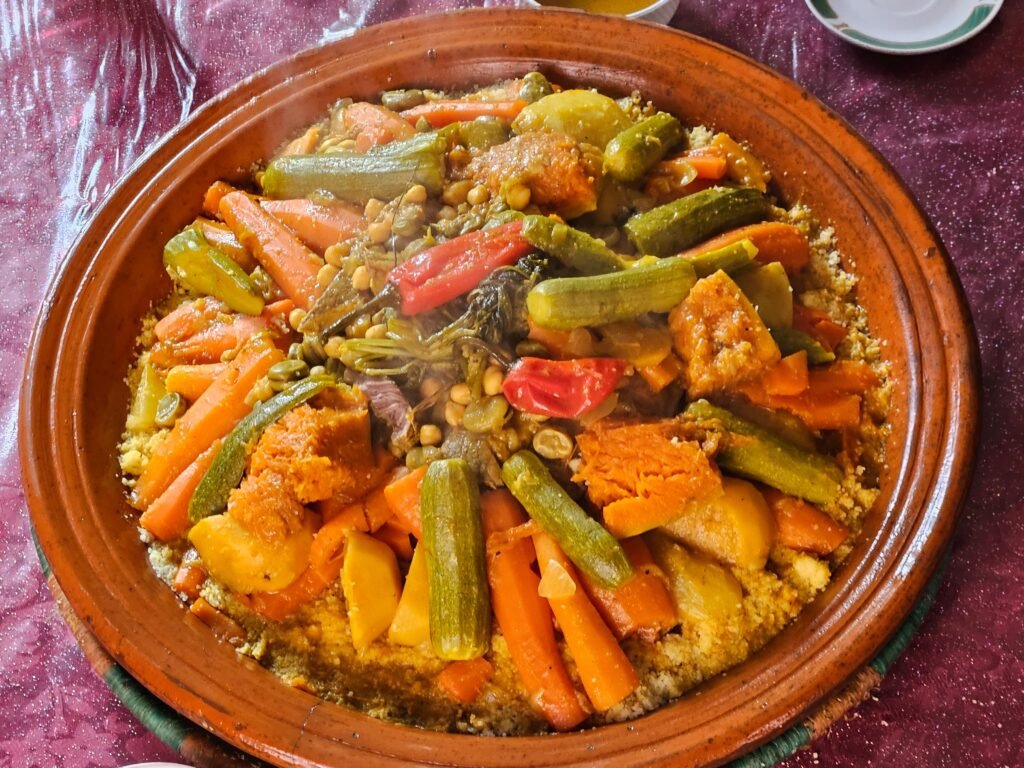
If tagine is the heart of Moroccan cuisine, couscous is its soul. Traditionally served on Fridays as a family gathering meal, couscous in Morocco is nothing like the quick-cooking boxed version found in supermarkets abroad. It is steamed multiple times over a simmering broth, resulting in light, fluffy grains that soak up incredible flavor.
Couscous is typically topped with a mix of seven vegetables, tender meat, and a flavorful broth, then garnished with caramelized onions and raisins for a touch of sweetness. Sharing a large communal plate of couscous with a Moroccan family is one of the most authentic ways to experience real Moroccan hospitality — and it remains one of the most beloved examples of Moroccan food in Morocco.
Pastilla: A Sweet and Savory Masterpiece
Pastilla (also spelled bastilla) is one of the most surprising dishes you’ll encounter. Originally from Fez, this dish combines layers of thin, crispy warqa pastry (similar to phyllo dough) with a filling of spiced pigeon or chicken, almonds, and eggs, all dusted with cinnamon and powdered sugar on top.
The combination of sweet and savory might sound unusual at first, but it perfectly reflects the complexity found in Moroccan food in Morocco. This dish is often reserved for special occasions like weddings and celebrations, making it a true showcase of Moroccan culinary artistry.
Harira: The Soup That Breaks the Fast
Harira is a hearty tomato-based soup made with lentils, chickpeas, and sometimes small pieces of lamb, seasoned with fresh herbs and warming spices. It’s especially popular during Ramadan, when families gather to break their fast each evening with a steaming bowl of harira alongside dates and sweet pastries.
Even outside of Ramadan, harira remains a beloved staple across the country, sold at street stalls and served in almost every restaurant menu you’ll find.
Street Food Culture in Morocco
While sit-down restaurants offer incredible dishes, some of the best introductions to Moroccan food in Morocco happen on the street. Cities like Marrakech and Fez are famous for their vibrant food stalls, especially in places like Jemaa el-Fnaa square, where the smoke from grills fills the evening air.
Popular street foods include:
- Msemen: A flaky, square-shaped pancake often eaten for breakfast with honey or cheese.
- Merguez sausages: Spicy lamb or beef sausages grilled over open flames.
- Snail soup: A surprisingly popular late-night snack, seasoned with a warming broth of herbs and spices.
- Fresh orange juice: Sold on nearly every corner for just a few dirhams.
- Sfenj: Moroccan doughnuts, fried fresh and often eaten plain or dipped in sugar.
Exploring these stalls is one of the most affordable and authentic ways to taste the diversity of Moroccan food in Morocco without ever sitting down at a formal restaurant.
Moroccan Bread: A Meal in Itself
Bread holds an almost sacred place in Moroccan culture. Known as khobz, this round, slightly dense bread is served with virtually every meal and is often used as a utensil to scoop up tagines and salads instead of forks. Many neighborhoods have communal ovens where families bring their homemade dough to be baked, a tradition that has remained largely unchanged for generations.
Mint Tea: The Symbol of Moroccan Hospitality
You cannot talk about Moroccan food in Morocco without mentioning mint tea, often referred to as “Moroccan whiskey.” Made from green tea, fresh mint leaves, and a generous amount of sugar, this tea is poured from a height to create a light foam on top and is served throughout the day as a symbol of hospitality and friendship.
Refusing a glass of mint tea when offered by a host is considered impolite, as tea time is deeply tied to social customs and the warmth for which Moroccan culture is known.
Regional Differences Across Morocco
One of the fascinating aspects of Moroccan food in Morocco is how much it varies by region:
- Fez: Known for refined, historically rich dishes like pastilla and elaborate tagines, reflecting its status as a former imperial capital.
- Marrakech: Famous for street food, grilled meats, and vibrant spice markets.
- Essaouira and coastal cities: Renowned for fresh seafood, including grilled sardines and fish tagines.
- The Atlas Mountains: Home to hearty Berber dishes, including a rustic version of tagine cooked over an open fire.
- The Sahara Desert regions: Simple, nomadic-inspired meals featuring dates, bread, and slow-cooked stews suited to desert life.
This regional diversity means that no two trips through the country will offer the exact same culinary experience, even though the core identity of the cuisine remains consistent.
Moroccan Sweets and Desserts
After a savory meal, Moroccan desserts bring the meal to a delightful close. Some favorites include:
- Chebakia: Sesame cookies fried and coated in honey, especially popular during Ramadan.
- Kaab el ghazal (“gazelle horns”): Crescent-shaped pastries filled with almond paste.
- Sellou: A dense, energy-rich mixture of toasted flour, almonds, sesame seeds, and honey.
- Moroccan pastries with almonds and honey: Often served alongside mint tea at the end of a meal or during celebrations.
These desserts highlight the same balance of spices, nuts, and natural sweetness that defines savory Moroccan food in Morocco as well.
Dining Etiquette: How to Eat Like a Local
If you’re invited to share a meal with a Moroccan family, a few customs are worth knowing:
- Meals are often eaten from a shared central dish rather than individual plates.
- It’s customary to eat with the right hand, especially when using bread to scoop food.
- Guests are typically offered the best portions of meat as a sign of respect.
- Washing hands before and after the meal is an important ritual, often done at the table with a special basin and pitcher.
- Declining seconds is polite, but expect to be lovingly pressured to eat more anyway — Moroccan hospitality is famously generous.
Understanding these customs will help you appreciate Moroccan food in Morocco not just as a meal, but as a cultural experience rooted in generosity and community.
Best Places to Experience Authentic Moroccan Food in Morocco
If you’re planning a trip, here are a few suggestions for where to eat:
- Local family-run riads: Many offer home-cooked meals that surpass anything you’ll find in a touristy restaurant.
- Medina food stalls: For an authentic, affordable taste of everyday Moroccan life.
- Cooking classes: Numerous cities offer classes where you can learn to make tagine or couscous from scratch, guided by local chefs.
- Souk spice markets: Even if you’re not cooking, wandering through a spice market is an experience in itself, filled with color and aroma.
Seeking out these experiences rather than sticking only to hotel restaurants will give you a much deeper appreciation for the richness of Moroccan cuisine.
Final Thoughts
At its core, Moroccan food in Morocco is about far more than flavor — it’s about history, hospitality, and community coming together around a shared table. From the slow-simmered tagines of Fez to the bustling food stalls of Marrakech, every dish tells a story shaped by centuries of cultural exchange between Berber, Arab, Andalusian, and Mediterranean traditions.
If there’s one thing every traveler agrees on after visiting the country, it’s this: no matter how many Moroccan restaurants you’ve tried elsewhere in the world, nothing compares to experiencing real, authentic Moroccan food in Morocco. The spices taste brighter, the bread is warmer, and the sense of hospitality that comes with every meal is something you simply cannot replicate outside the country’s borders.
So the next time you find yourself planning a trip to North Africa, come hungry — because the food alone is reason enough to visit.